


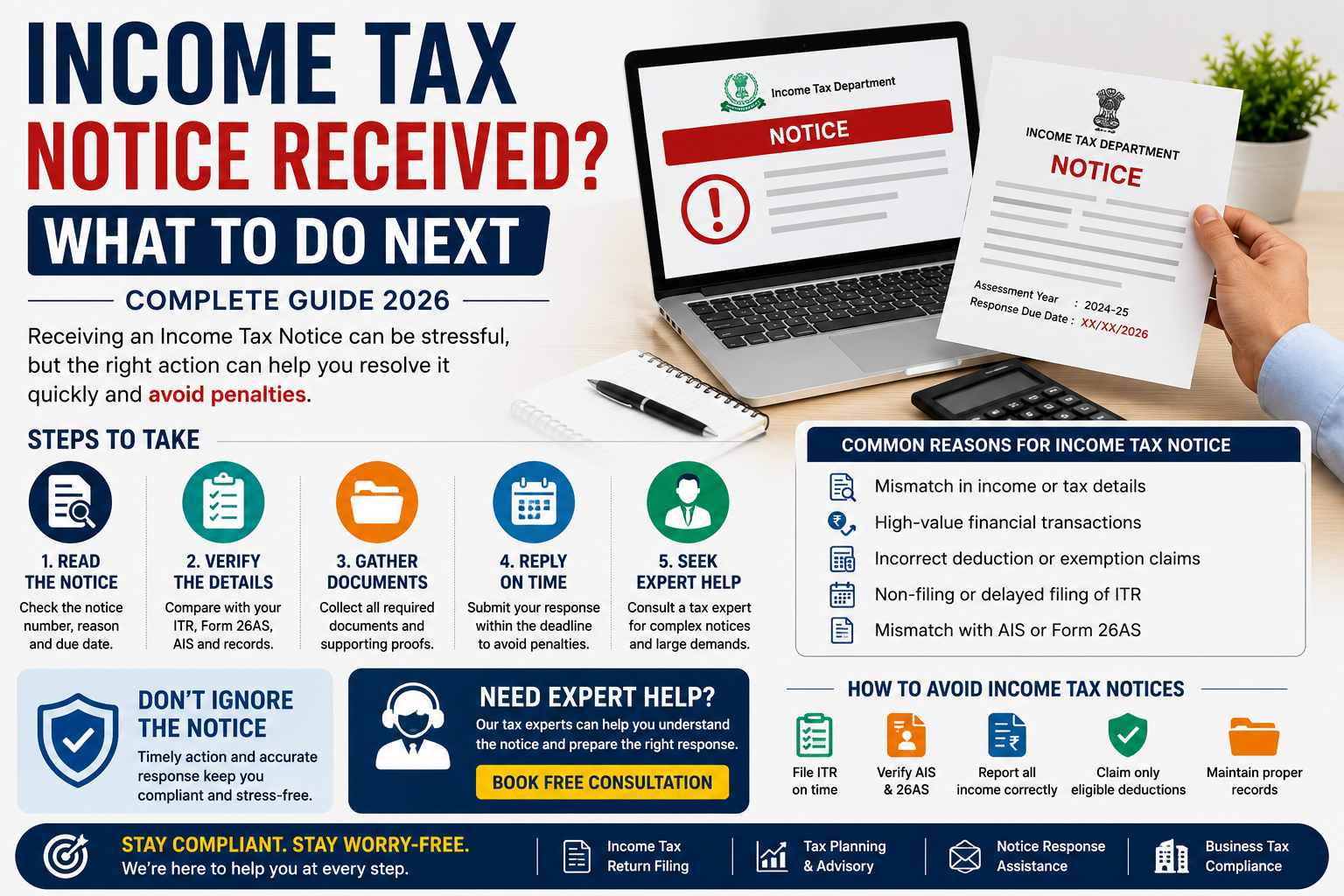

Income Tax Notice Received? What to Do Next (Complete Guide 2026)
Receiving an Income Tax Notice can be stressful, but it doesn’t always mean you’ve done something wrong. Many notices are issued to seek clarification, verify information, or request additional documents. The key is to understand the notice, respond within the deadline, and take appropriate action.
In this guide, we’ll explain why you may receive an income tax notice, the different types of notices, and the steps to resolve them efficiently.
What is an Income Tax Notice?
An Income Tax Notice is an official communication sent by the Income Tax Department when it requires information, clarification, or action from a taxpayer.
You may receive a notice due to:
• Errors in your Income Tax Return (ITR)
• Mismatch between reported income and Form 26AS or AIS
• Unreported high-value transactions
• Non-filing or delayed filing of ITR
• Incorrect deduction or exemption claims
Receiving a notice doesn’t automatically mean you owe additional tax, but you should respond promptly.
Common Reasons for Receiving an Income Tax Notice
Some of the most common reasons include:
• Failure to file ITR before the due date
• Mismatch in TDS details
• High-value financial transactions
• Incorrect deduction claims under Sections 80C, 80D, etc.
• Income mismatch with AIS or Form 26AS
• Scrutiny assessment by the Income Tax Department
Types of Income Tax Notices
Notice for Non-Filing of ITR
Issued when a taxpayer has not filed an Income Tax Return despite being liable to do so.
Defective Return Notice
Sent when the filed return contains errors or missing information.
Scrutiny Notice
Issued when the department wants to examine your return in detail.
Demand Notice
Issued if additional tax, interest, or penalty is payable.
Reassessment Notice
Sent if the department believes income has escaped assessment.
How to Avoid Income Tax Notices
Follow these best practices:
✔ File your ITR before the due date
✔ Verify Form 26AS and AIS before filing
✔ Report all income sources accurately
✔ Claim only eligible deductions
✔ Maintain proper financial records
✔ Reconcile TDS details
Received an Income Tax Notice?
Don’t ignore it. Get expert assistance from Digihunter’s verified tax professionals to review your notice, prepare a response, and ensure compliance before the deadline.
What Should You Do After Receiving an Income Tax Notice?
Read the Notice Carefully
Check: Notice number Assessment Year Reason for the notice Due date for response
Verify the Information
Compare the notice with: Income Tax Return Form 26AS Annual Information Statement (AIS) Salary slips Bank statements
Gather Supporting Documents
Prepare: PAN Card Income proof Investment proofs Tax payment challans Bank statements Form 16/Form 16A
Respond Within the Deadline
Most notices have a specific response timeline. Missing the deadline may lead to penalties or further proceedings.
Seek Professional Assistance
If the notice involves: Scrutiny assessment Large tax demand Capital gains Business income International transactions consult a qualified tax professional before submitting your response.
Conclusion
Receiving an Income Tax Notice should not cause panic. The most important steps are understanding the reason, reviewing your records, and responding accurately within the prescribed time. Proper documentation and timely action can help resolve most issues smoothly.
Professional guidance can simplify the process, reduce stress, and help ensure full compliance with tax regulations.
Need expert tax planning or notice response assistance? Connect with verified tax professionals through Digihunter today.
✅ Income Tax Notice Response
✅ ITR Filing & Revision
✅ Tax Planning
✅ Business Tax Compliance