


GST Audit Explained: Everything Every Business Should Know (2026 Guide)
GST Audit Explained: Everything Every Business Should Know (2026 Guide)
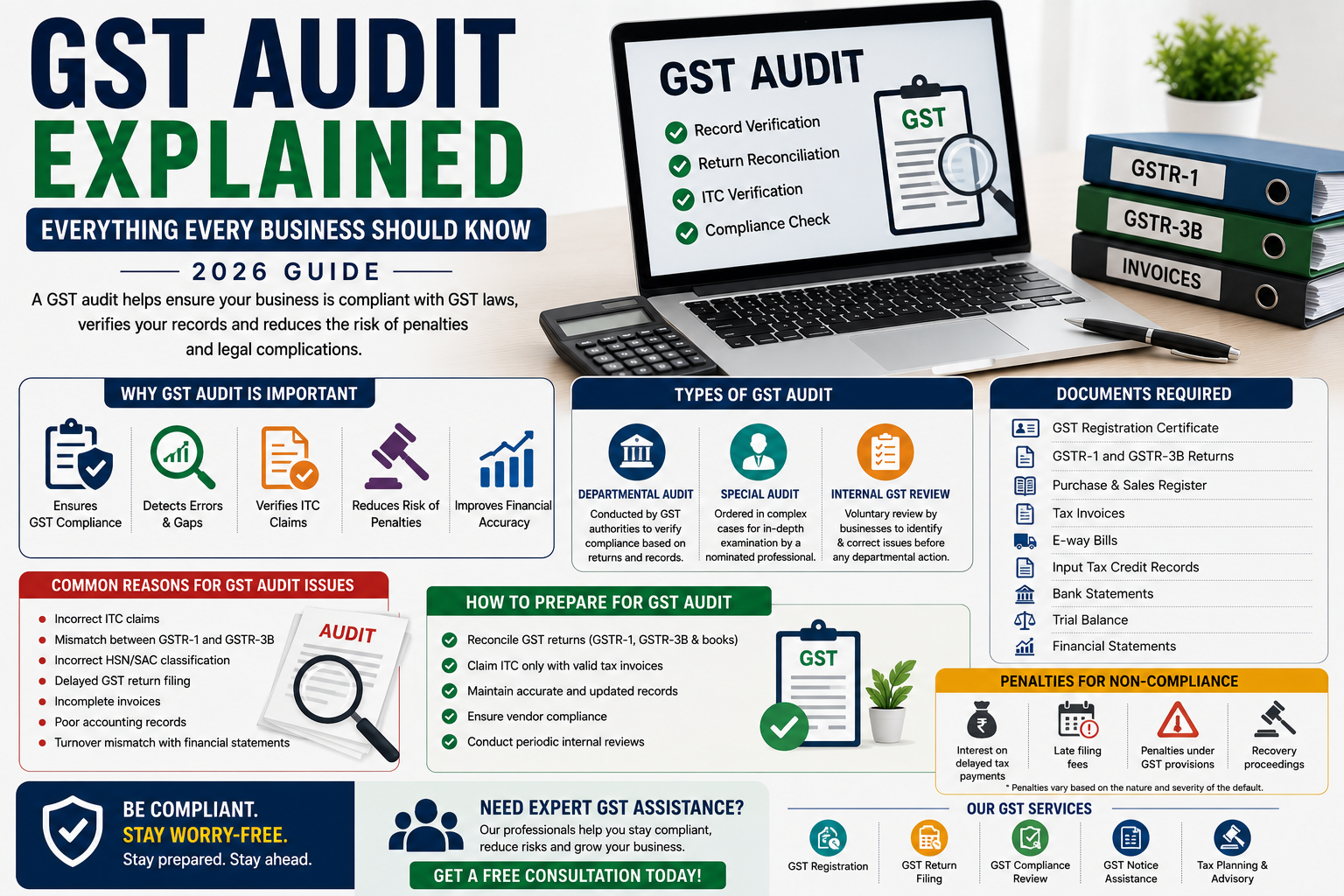
A GST audit helps verify whether a business has correctly maintained its books of accounts, reported turnover accurately, and paid the appropriate Goods and Services Tax (GST). While the GST audit provisions have evolved over time, businesses should continue maintaining proper records and be prepared for departmental scrutiny whenever required.
This guide explains what a GST audit is, why it matters, and how businesses can stay prepared in 2026.
What is a GST Audit?
A GST audit is the examination of a business’s records, returns, invoices, tax payments, and compliance with GST laws to ensure that the correct amount of tax has been paid.
Even where mandatory audit requirements have changed, tax authorities can still conduct departmental audits, inspections, and investigations under the GST law.
Why is a GST Audit Important?
A GST audit helps businesses:
1. Ensure GST compliance
2. Detect reporting errors
3. Verify Input Tax Credit (ITC) claims
4. Reduce the risk of penalties
5. Improve financial record keeping
Maintaining accurate records also makes responding to GST notices much easier.
Types of GST Audits
1. Departmental Audit
Conducted by GST authorities to verify tax compliance based on returns and business records.
2. Special Audit
Ordered in complex cases where authorities require an in-depth examination by a nominated professional under the GST Act.
3. Internal GST Review
Many businesses voluntarily conduct internal GST reviews to identify and correct issues before any departmental action.
Documents Required During a GST Audit
Keep the following documents updated:
● GST Registration Certificate
● GSTR-1 and GSTR-3B Returns
● Purchase Register
● Sales Register
● Tax Invoices
● E-way Bills
● Input Tax Credit Records
● Bank Statements
● Trial Balance
● Financial Statements
Is your business GST compliant?
Get a GST health check from Digihunter’s verified professionals and identify compliance gaps before they become costly.
Common Reasons Businesses Face GST Audit Issues
● Incorrect Input Tax Credit claims
● Differences between GSTR-1 and GSTR-3B
● Incorrect HSN/SAC classification
● Delayed GST return filing
● Incomplete invoices
● Poor accounting records
● Turnover mismatch with financial statements
How to Prepare for a GST Audit
Reconcile GST Returns
Ensure GSTR-1, GSTR-3B, and purchase records match.
Verify Input Tax Credit
Claim ITC only for eligible purchases supported by valid tax invoices.
Maintain Proper Documentation
Organize invoices, contracts, payment proofs, and GST records.
Review Vendor Compliance
Ensure suppliers have filed their GST returns correctly where relevant to your ITC claims.
Conduct Periodic Internal Reviews
Regular compliance reviews help identify mistakes before they become major issues.
Penalties for GST Non-Compliance
Failure to comply with GST provisions may result in:
● Interest on delayed tax payments
● Late filing fees
● Penalties under applicable GST provisions
● Recovery proceedings in serious cases
The actual consequences depend on the nature of the default and applicable law.
Conclusion
A GST audit should be viewed as an opportunity to strengthen compliance rather than something to fear. Businesses that maintain accurate records, reconcile returns regularly, and follow GST regulations are better positioned to avoid disputes and penalties.
Working with experienced GST professionals helps ensure smooth compliance and prepares your business for any departmental verification.