


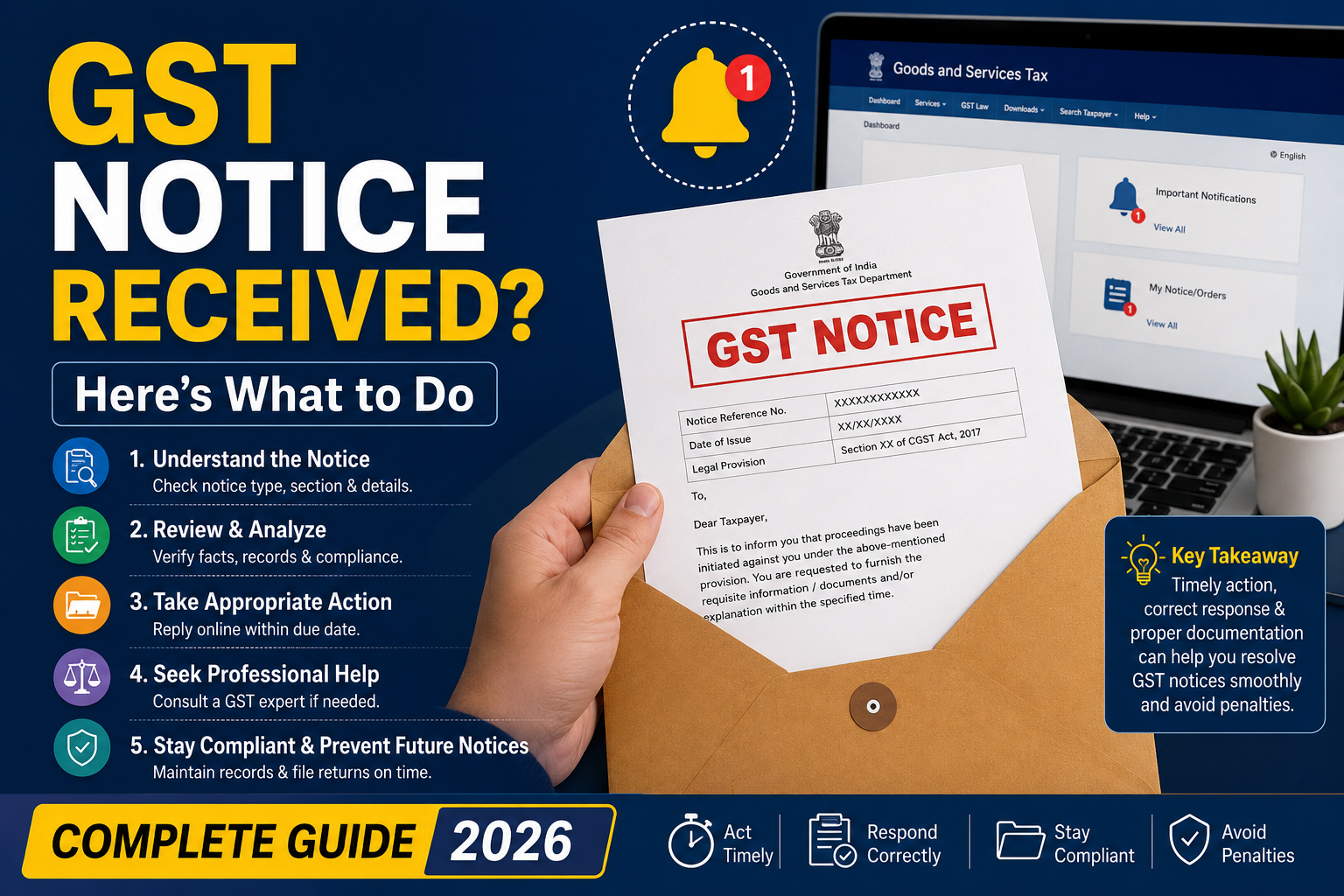

GST Notice Received? Here’s What to Do (Complete Guide 2026)
Receiving a GST notice from the tax department can be stressful, especially if you’re unsure why it was issued or how to respond. However, receiving a notice does not always mean you’ve done something wrong. In many cases, it may be due to a mismatch in GST returns, delayed filing, or a request for additional information.
This guide explains the types of GST notices, common reasons for receiving them, and the steps you should take to respond correctly.
What is a GST Notice?
A GST notice is an official communication issued by the GST authorities to seek clarification, request documents, demand tax payment, or inform taxpayers about discrepancies in GST returns.
Ignoring a GST notice can lead to penalties, interest, or legal proceedings. Therefore, every business owner should review the notice carefully and respond within the prescribed time.
Types of GST Notices
Some common GST notices include:
Notice for Non-Filing of GST Returns
Issued when a taxpayer fails to file GST returns within the due date.
Notice for Mismatch in Returns
Sent when the information in GSTR-1, GSTR-3B, or purchase records does not match.
Demand Notice
Issued when tax authorities believe additional GST, interest, or penalty is payable.
Audit or Inspection Notice
Businesses may receive notices requesting books of accounts, invoices, and other supporting documents during an audit.
Common Reasons for Receiving a GST Notice
Businesses may receive GST notices for several reasons, including:
⊙ Delay in filing GST returns
⊙ Mismatch between GSTR-1 and GSTR-3B
⊙ Excess or incorrect Input Tax Credit (ITC) claimed
⊙ Non-payment or short payment of GST
⊙ Differences between GST returns and e-way bill data
⊙ Failure to register under GST despite eligibility
Understanding the reason mentioned in the notice is the first step toward resolving the issue.
Steps to Take After Receiving a GST Notice
Read the Notice Carefully
Check: Notice reference number, Section under which it is issued, Reason for the notice, Response deadline.
Verify the Information
Compare the notice with your: GST returns, Purchase invoices, Sales invoices, Books of accounts.
Collect Supporting Documents
Keep ready: GST returns, Tax invoices, Payment challans, Bank statements, Reconciliation reports.
Respond Within the Due Date
Always submit your reply before the deadline mentioned in the notice. Delayed responses may result in additional penalties.
Seek Professional Assistance
If the notice involves complex issues or large tax demands, consult a qualified GST professional before submitting your response.
How to Avoid GST Notices
You can reduce the chances of receiving GST notices by:
⊙ Filing GST returns on time
⊙ Reconciling returns every month
⊙ Claiming only eligible Input Tax Credit
⊙ Maintaining accurate invoices and records
⊙ Updating business details with GST authorities
Regular compliance is the best way to avoid unnecessary notices.
Related Digihunter Services
Need help with GST compliance? Explore:
⊙ GST Registration Services
⊙ GST Return Filing Services
⊙ Income Tax Return Filing
⊙Business Compliance Services
These services help businesses remain compliant and reduce the risk of future notices.
Conclusion
Receiving a GST notice can be concerning, but timely action and proper documentation can help resolve most issues without major complications. Understanding why the notice was issued and responding correctly is essential for maintaining compliance.