



What is GST Liability?
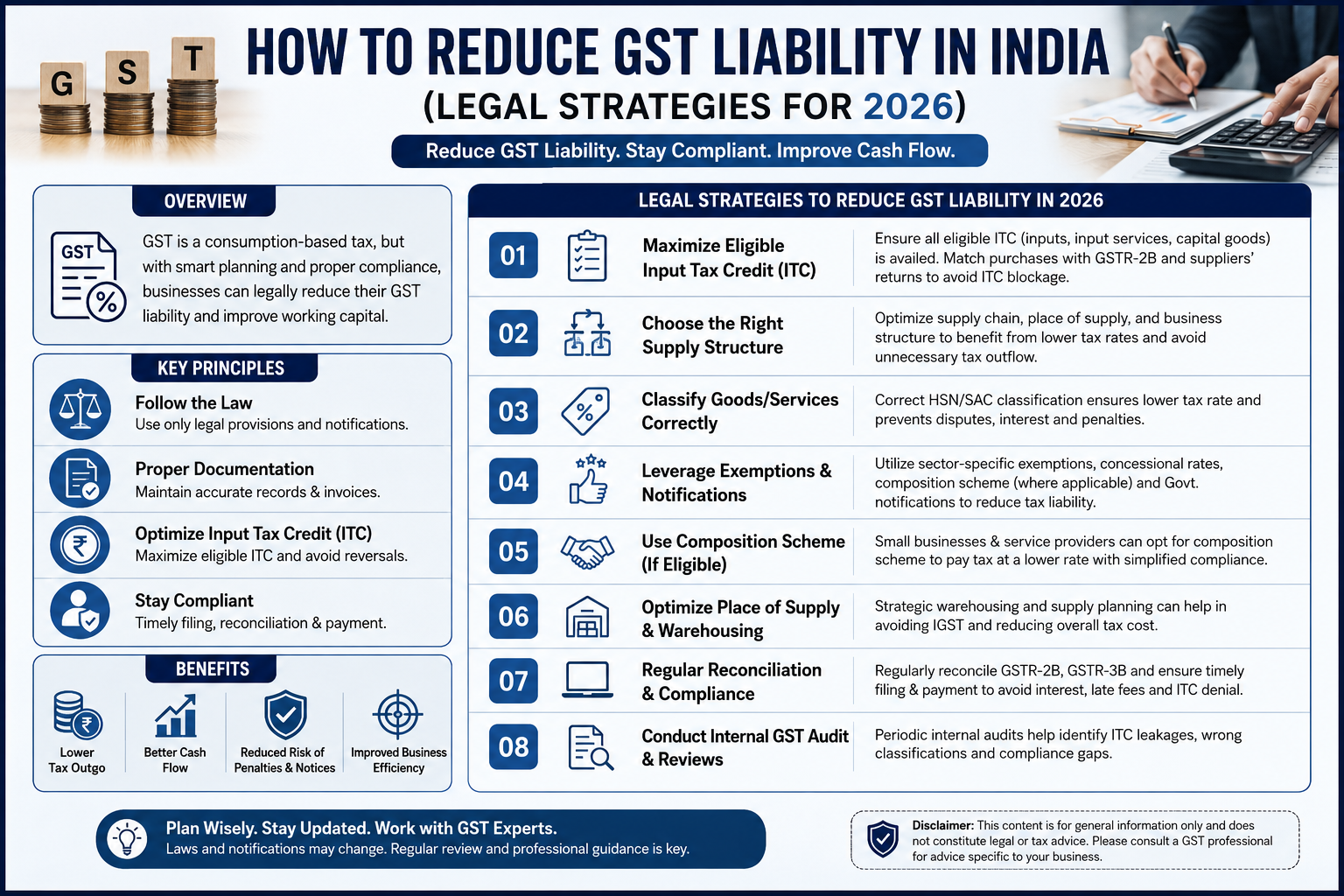
How to Reduce GST Liability in India (Legal Strategies for 2026)
Managing GST effectively is crucial for businesses to maintain profitability and stay compliant. Many businesses end up paying more GST than required simply due to lack of planning and awareness.
In this guide, we explain how to reduce GST liability legally in India, using smart strategies and compliance practices.
GST liability is the total tax a business must pay to the government after adjusting:
👉 Output GST – Input Tax Credit (ITC)
Reducing GST liability means maximizing ITC and optimizing tax payments legally.
Claim Input Tax Credit (ITC) Properly
The most effective way to reduce GST liability is by claiming Input Tax Credit.
✔ Claim ITC on business-related purchases
✔ Ensure supplier has filed returns
✔ Match invoices with GST portal data
💡 Incorrect ITC claims can lead to penalties.
Choose the Right GST Scheme
Businesses should select the appropriate scheme:
Regular Scheme:
✔ Allows ITC claims
✔ Suitable for growing businesses
Composition Scheme:
✔ Lower tax rate
✔ Less compliance
❌ No ITC benefit
👉 Choose wisely based on turnover and business model.
Maintain Accurate Invoicing
Proper invoicing ensures:
✔ Correct GST calculation
✔ Easy ITC claims
✔ Avoidance of penalties
Ensure invoices include:
- GSTIN
- HSN/SAC codes
- Tax breakdown
Reconcile GST Returns Regularly
Mismatch in returns can increase liability.
✔ Match GSTR-1, GSTR-3B, and purchase data
✔ Identify missing ITC
✔ Correct errors on time
Regular reconciliation prevents losses.
Avoid Late Filing and Penalties
Late GST filing results in:
❌ Interest charges
❌ Late fees
❌ Loss of ITC
Always file returns on time to avoid extra costs.
Optimize Business Expenses
Ensure all eligible expenses are recorded:
- Office rent
- Business purchases
- Professional services
💡 More eligible expenses = More ITC = Lower GST
Use Reverse Charge Mechanism (RCM) Smartly
Understand where RCM applies.
✔ Pay GST under RCM where required
✔ Claim ITC on eligible transactions
Proper handling avoids unnecessary tax burden.
Common Mistakes to Avoid
❌ Not claiming ITC fully
❌ Incorrect GST return filing
❌ Poor record-keeping
❌ Choosing wrong GST scheme
Avoid these to minimize tax liability.
Classify Goods and Services Correctly
Wrong classification can lead to:
❌ Higher tax rates
❌ Notices from authorities
Use correct HSN/SAC codes to ensure proper tax rates.
Conclusion
Reducing GST liability is not about avoiding tax—it’s about smart planning and proper compliance. By maximizing ITC, choosing the right scheme, and maintaining accurate records, businesses can significantly lower their GST burden.
Professional guidance ensures error-free filing and maximum savings.